Hiya!

Thanks for visiting the lair of the Guitar Weasel!
If you enjoyed this blog please visit our Oil City Pickups site where you can see and buy our full range of products
.

Saturday, 20 April 2013

Gauss 2 ... return of the gauss!

As promised here is part two of my home made gauss meter magnetometer project ... the dreaded circuit diagram. All pretty simple really: the 9v DC is smoothed by the 0.33uF capacetor before being reduced to 5v by the power supply module. Then the 0.1uF cap adds further smoothing before the voltage reaches the hall effect sensor. The output from the whole lot is then measured by the multimeter ... any cheap digital one will do.
In the next part I will talk you through assembly and interpreting the results ... happy days!

Tuesday, 2 April 2013

Is there a gauss in the house? Pt 1

My old Mk1 gaussmeter!


Why, you might ask, might an ordinary guitarist need a gauss-meter (or magnetometer)?  Er … well you can probably see why it might be useful to me as a pickup maker, dealing with magnets all day … but why might you want to make one? Well aside from curiosity and stuff like that … if you mess about changing guitar pickups etc and more importantly, occasionally swapping humbucker or P90 magnets … a tool that not only lets you tell the polarity of a pickup, but also its flux strength is a pretty cool thing to have.  You can even 'age' magnets yourself once you can measure before and after strength, and ...the clincher ... is when you discover that a DIY meter need only four components, and requires only that you can solder reasonably well to make it! You will need a digital multimeter to read the info your gauss meter is sending out, but many of us have one of those anyway, and a cheapo e bay one for six or seven quid is fine.

Reality check? Okay, so a cheap compass will work for checking pickup polarity ... and a Schatten polarity tester - from StewMac in the US - will do an even clearer job. But with postage, the Schatten (which is only a little magnet in a tube with one pole marked nort and the other south) will cost more than building a gaussmeter ... and one of these is WAY cooler and should cost less than a tenner ... fifteen to twenty quid if you have to buy a cheap multi meter!
   
Firstly the major component is a ‘hall effect device’. This little gismo is used in many applications, and has the neat property that when you feed it a nice stable voltage of say, five volts … a nice stable 2.5 volts comes out the other end.  ‘BORING’ you may cry … well yes, until you put the hall sensor in a magnetic field … then if the pole is ‘south’ the voltage goes up proportionally with the strength of the magnet … and if north, it goes down … again in proportion to the strength of the field. 
In theory we only need to feed that 5 volts in and measure the DC voltage ‘out’ with a digital multi meter  to have a crude, functioning gauss meter. In practise it’s only slightly more complex than that: if you intend to power the hall sensor from a 9v battery then you’ll need a ‘voltage regulator’ to deliver that 5 volts. Many people leave it at those two components … but I was taught that it’s a good plan to ‘filter’ the DC from the battery to the power supply and also filter the power supplies’ output to the hall sensor … just to provide nice squeaky clean DC where it’s needed.  That simply means a capacitor before the power supply and one after … simples!
I mounted everything on a small ‘perf board’ I had knocking about … they are only a couple of quid on e bay.
So here’s the component list , and we’ll get to the circuit diagram and hooking it up in part 2.
1x LM7805 voltage regulator
1x 0.33uF ceramic capacitor
1x0.1uF  ceramic capacitor
And last but most important … an Allegro A1302 Hall effect sensor
E bay is good for all of these … a chunk of ‘perf board’  to hook it all up on would be cool … and if you are feeling like being posh … a pair of banana sockets to attach the meter and a box to put everything in (you could use an old pedal enclosure).

Sunday, 31 March 2013

Seems like about five minutes ago it was Christmas ... and now 'lookie lookie', we're into the Easter holidays ... scary how time charges along!
The main Oil City website has had a major overhaul, with input from some friends of mine (you know who you are)  and is cracking along nicely. Our Oil City logos have had a professional re design, and I'm popping out new products left right and centre!
Above is our classic P90 'FireWatch' pickup ... and hot on its heels will be a fully humbucking pickup in a P90 shell. featuring the power and breadth of my BrassKnuckle in a smaller, P90 guitar friendly package.

My Cow-T-Ron pickups will soon be available with 'LollarTron' style curved top nickel covers as an option, and my humbuckers are now available covered or with zebra/reversed zebra/black or all cream bobbins. 


All my Strat pickups are now available with baseplates to special order ... and they are also available as an after-market part in my fetching 'gun blued' finish.
Still got to get Mini Humbuckers and Frebird  pickups off the blocks ... and Jaguar and Jazzmaster units will be following them up.
My next set of blog posts should be some 'how to' posts ... including how to build a polarity tester/gauss meter ... and some fun wiring doodads.

Tuesday, 5 February 2013

Phew!


I’ve been so busy recently I’ve hardly had a chance of keeping the blog up to date. Custom jobs and new products … as well as keeping all of you supplied with old favourites like Triple Blues Strat sets and HardMan Tele pickups. Well, I will have been going full steam ahead for very nearly a year now and I’m a little shocked by the way the business has come on. There are literally hundreds of guitarists using Oil City pickups all over the country … and abroad too!  I have had to build ‘Gloria’ my ‘mark three’ winding machine to cope with the demand … I will post pictures as soon  as I have time to tidy her up. She had to be pressed into service even before she was properly finished!
I’ve just got the new ‘CowTron’ pickup added to the list of production pickups … 

and a new high output Strat set known as StoneTones … and now there is barely a day goes by without the familiar sight of me doing the ‘post run’ at the local corner Post Office. A carrier bag packed with padded envelopes bearing our familiar ‘industrial sunset’ logo. Yes it’s all very East End!
The only down side is that I have had no time to gig, see live music … or indeed to see much of the outside world!

Friday, 11 January 2013

Gertcha! (you cowson!)


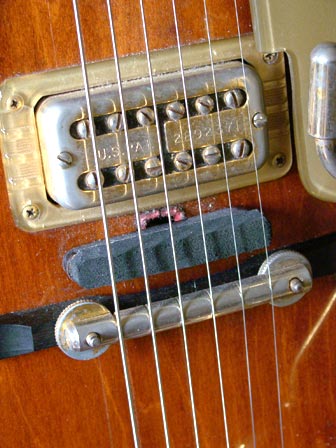
I don’t really know why, but the great sound of Gretsch pickups seems to have passed me by. I remember sitting and listening to the electronics expert Ron Fairweather at the music shop where I worked in the seventies. He had some big Gretsch semi acoustic and it sounded wonderful. But then I went out and bought a Telecaster and the die was cast! 
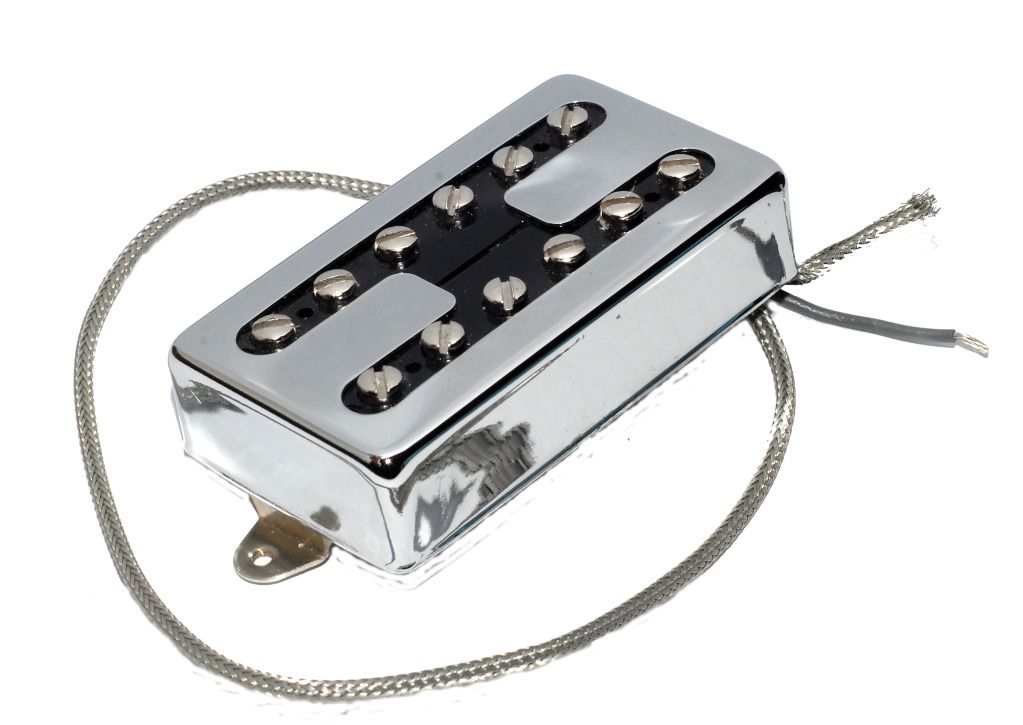
Well, till now that is. A customer asked me if I could come up with a classic Gretsch FilterTron sort of sound, in a standard humbucker package. Well could I?
The FilterTron sound comes from firstly it’s very low power, for a humbucker at least. With a fifties Gibson PAF humbucker the DC resistance was anywhere between 7k and 9k. With a fifties Filtertron the resistance barely crept up to 5k … less than the majority of single coil pickups!
The FilterTron was a design cooperation between   Ray Butts and Chet Atkins, largely because Atkins didn’t like Gretsch’s  single coil pickups at the time. In fact Butts may well have been the inventor of the humbucker rather than Seth Lover of Gibson … it’s just that Lover got to the patent office first! Anyhow, tiny, low wound coils with a huge alnico 5 magnets give the FilterTron its trademark open twangy growl.
My first step was to measure up a FilterTron and see how I was going to fit the essentials of a tall narrow pickup into a case designed for a PAF … a wide, squat one! The Gretsch pickup is around ¾ of an inch tall … whereas a vintage nickel PAF cover is  only 7/8! One bit of good news was that though much narrower, the Gretsch bobbins were around the same length as standard F spaced Gibson style bobbin, and near enough the same height. This coupled with the fact that though the Gretsch pickup was much narrower than the Gibson, the bobbins were no more than 1.6mm closer together. This would mean that I could use standard Gibbo style bobbins without cutting them down and not really change the sound to an appreciable degree.
My next problem was the magnet. The fifties magnets were huge tombstones ¼ of an inch thick … compared with the 1/8th inch thick PAF magnets! Their power helped to compensate for the coils low output … and the alnico 5 helped to add snap and bite. Recent re-issues have used ceramic magnets, but I’m not a fan of the grainy top you can get with that, so I devised a special ‘Siamese’ magnet assembly that utilises two alnico 5 magnets to take the place of the one in the original. These pickups will (shortly) go into full production … so I have persuaded my magnet suppliers to make vintage sized magnet for future editions of this pickup!
With two low output bobbins wound (both screw coils like the original Gretsch) and a magnet assembly sorted I then found I didn’t have long enough baseplate screws to hold it all together! Oh well, masking tape, double sided tape and cardboard packing got a rough prototype sitting in the guts of the ‘pink terror’ Strat.

Here are a couple of rough and ready MP3s to show what we have (direct into Reaper with just a little slap back echo on the second one
MP3
MP3 2
Result!  The sound was pretty close to what I’d expected: bright, woody with brilliant string definition and an almost single coil character. Twangy and thinner than a conventional humbucker it has lots of attack and a particular ‘stringy’ quality that with overdrive (my trusty TS808 clone) turned into quite a roar.
What’s to do now? Well the pole pieces need changed for some nice nickel plated ones instead of the trashy gold plated ones I have in there as place holders.  Some longer screws need to be sourced to hold the whole shooting match together … oh and some chunky maple spacers will need to be made, pretty much double the size of normal humbucker ones.
I’ve trial fitted a nickel cover and luckily the ‘lip’ of the baseplate gives just enough height for a cover to be fitted … phew! Not sure if the pickup will be potted that’ll be up to the customer, but unspotted this pickup has a lovely delicate tone … it almost seems a shame …
Oh I should point out that my products are in no way associated with Gretsch or the FilterTron trademarks.
Stay tuned for part two!

Thursday, 6 December 2012

Making a Diesel Tap


Thought I'd show some of the stages in making one of our Diesel Tap  pickups ...

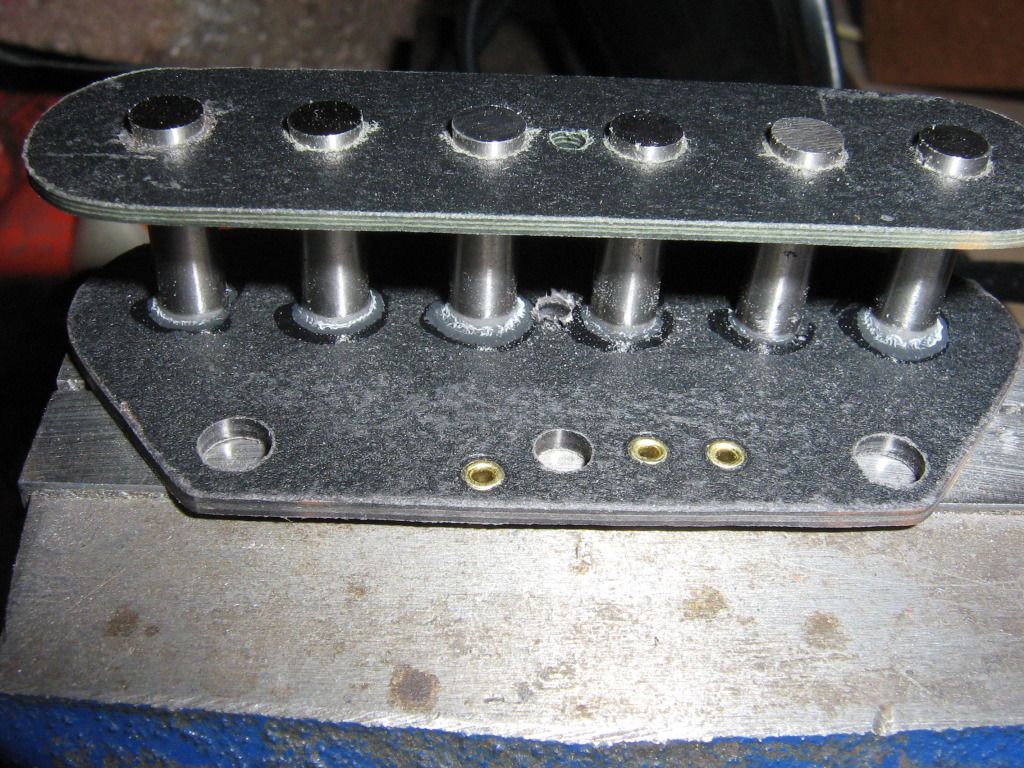
Here we have the assembled flatwork sitting on my vice ... having just had its eyelets set in ... yes three!
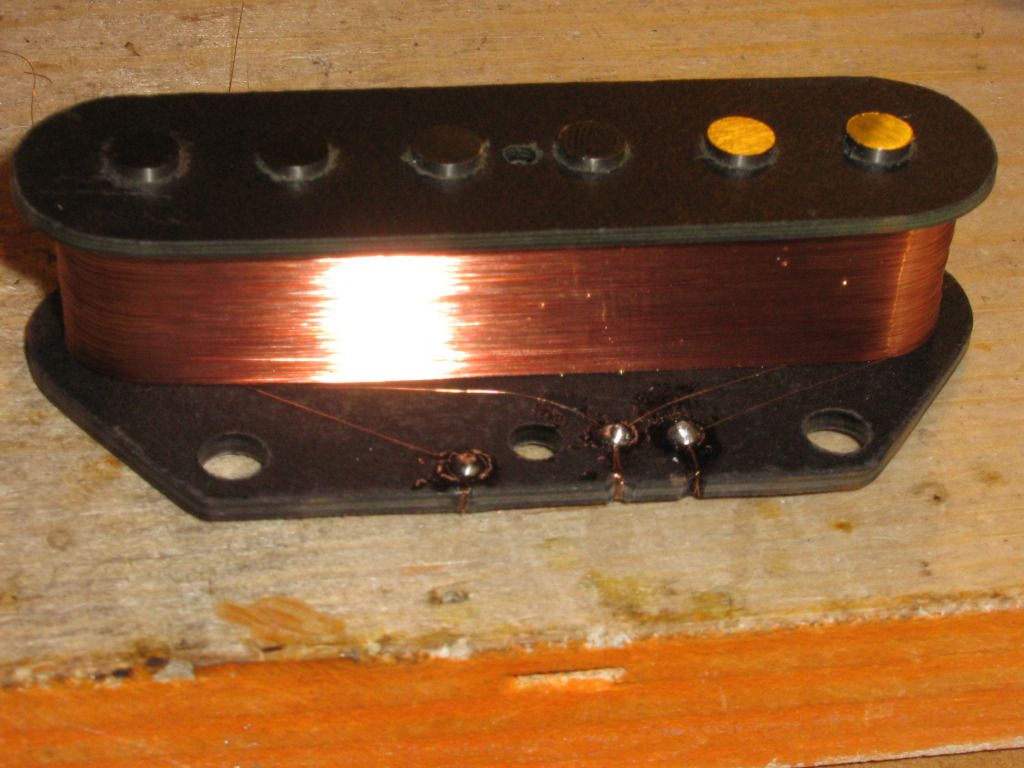
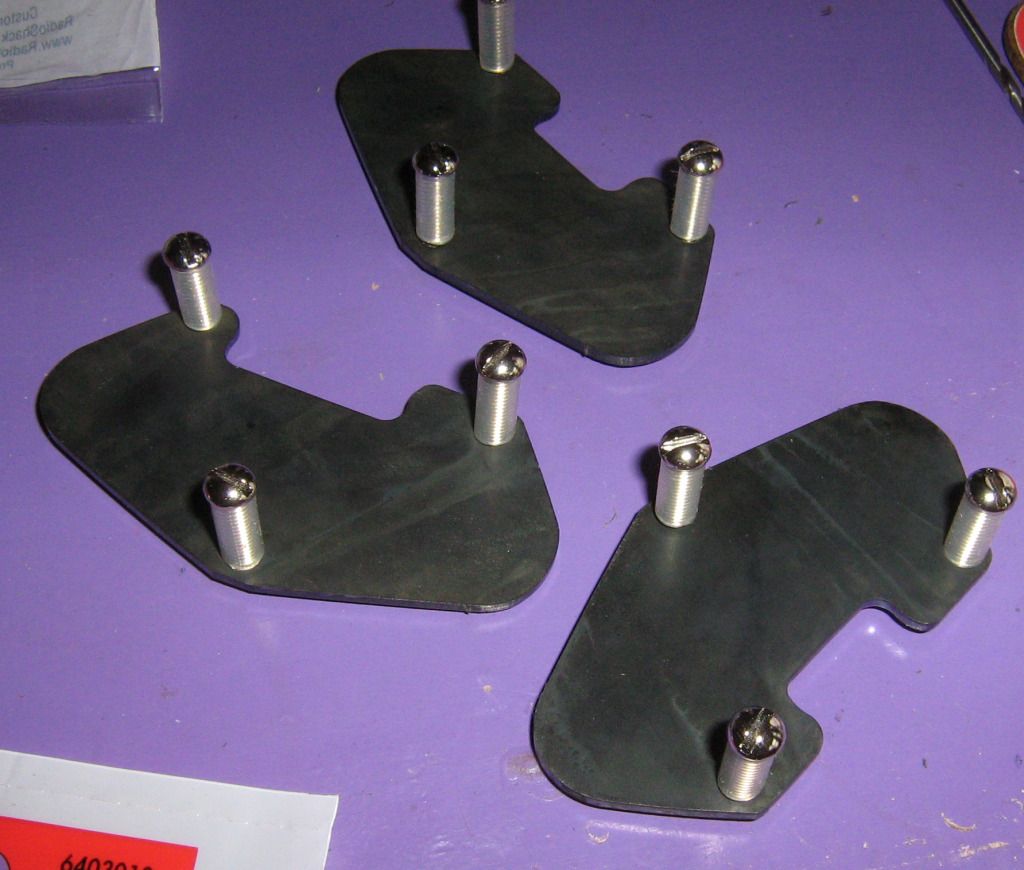
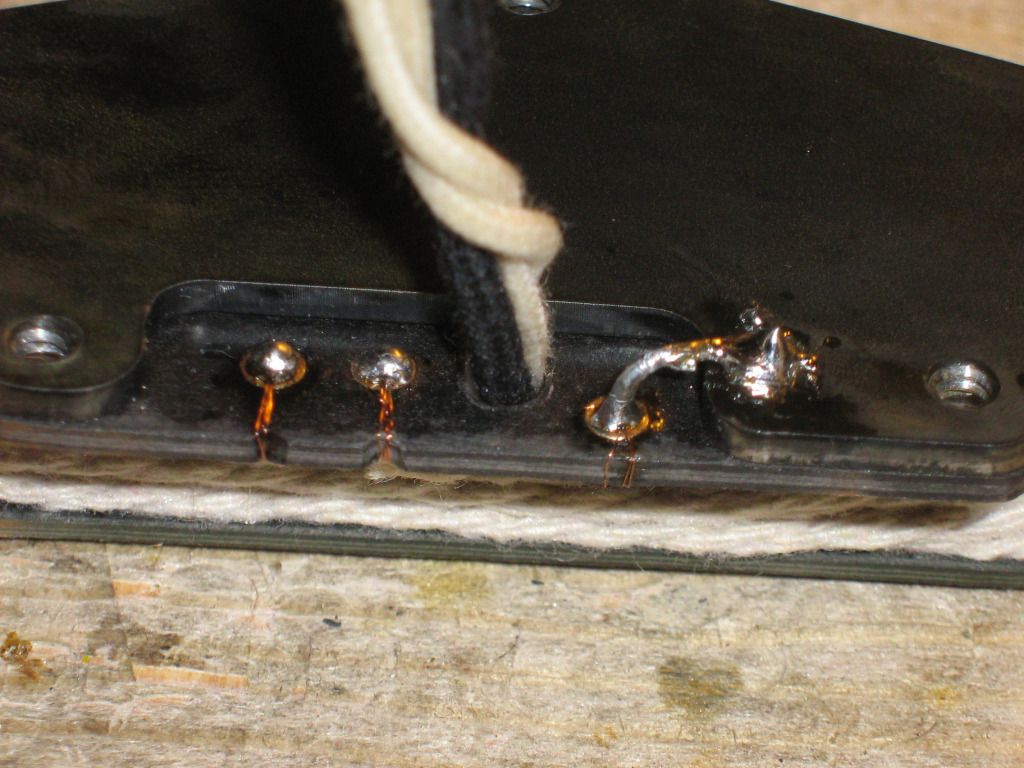
Coils wound ... here you can clearly see from left to right: coil start wire tap at 6.5k (centre) and coil finish wire ... the full 9k. A little cyanoacrilate adhesive is used to hold the wires to the bottom flatwork, and away from each other and the cable hole! After marrying up to one of our specially cut and gun-blued base plates ... the one for the 'Tap' is on the left ... with the wider 'cut out' ...
The hookup wires are added and the baseplate earth link. you can see I've string wrapped the coil to protect it too.
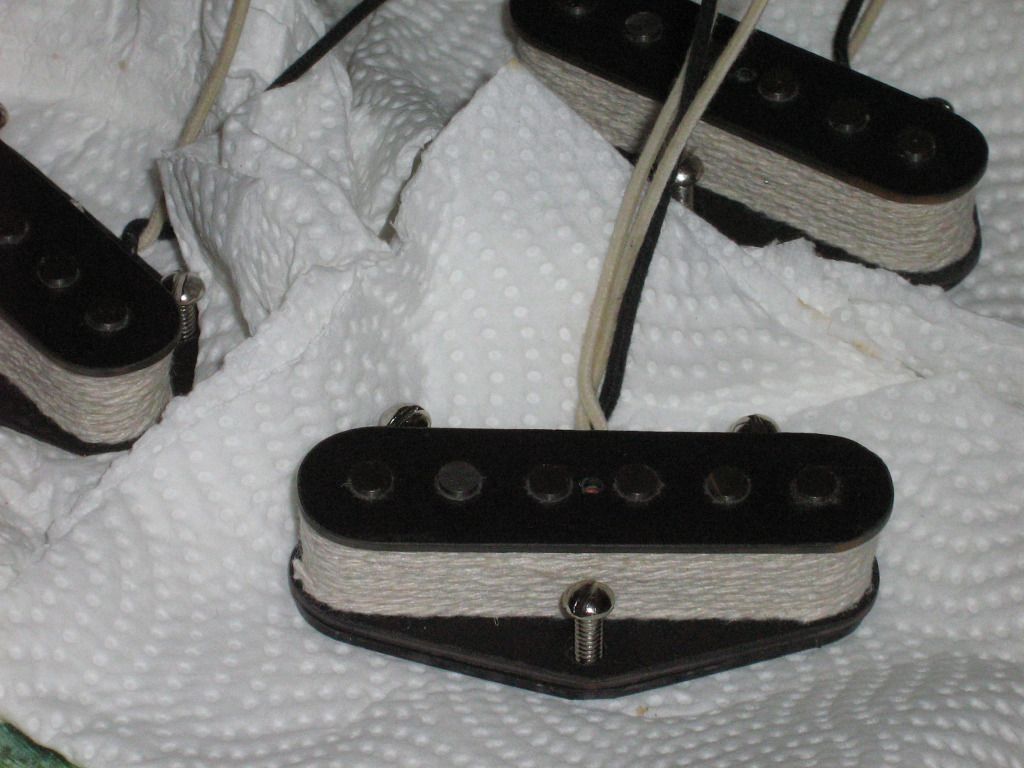
Here are the batch of three produced together (one Thames Delta, one HardMan and our customer's Diesel Tap) awaiting potting ... dummy short screws are used to keep the base plates aligned while in the hot beeswax/paraffin wax mix .
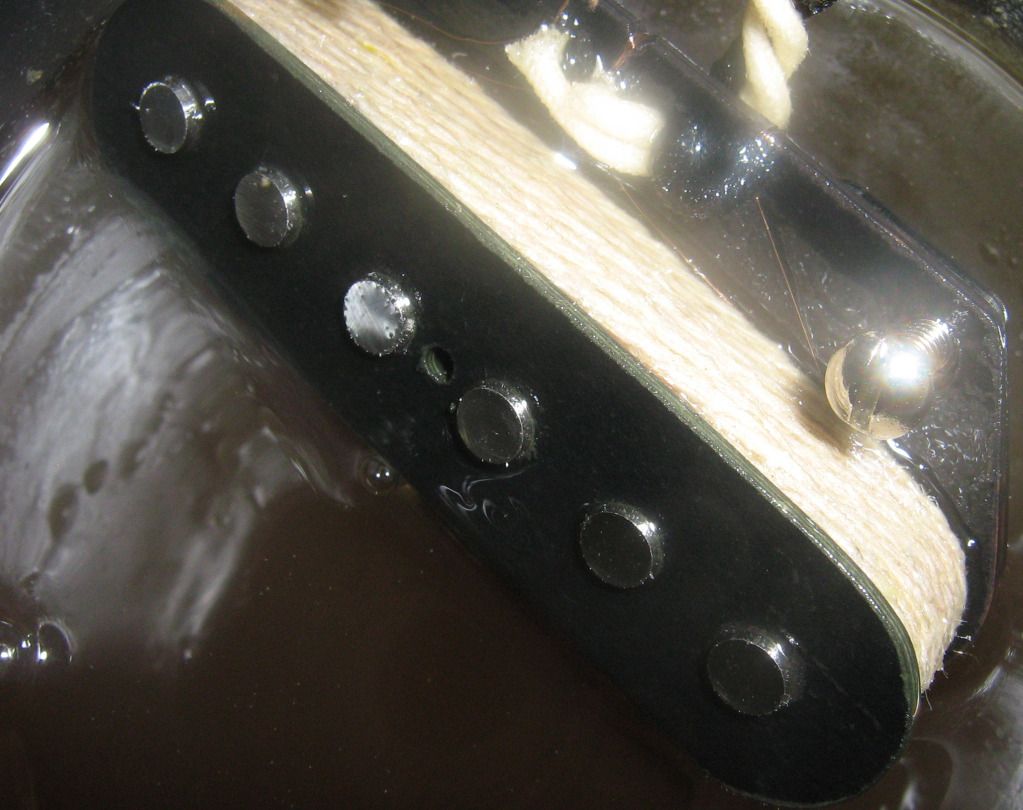
And the customer's 'Tap' emerges from the potting bath ...
It's cooled for an hour or so, before being checked electrically and having it's signed serial number applied ...
Then it'll join it's HardMan neck pickup and custom loom to be dispatched to the customer!

Thursday, 15 November 2012

The Oil City BrassKnuckle


To my mind far too many humbucking pickups today sound similar - everyone seems to be producing stuff with a tight, compressed, almost processed sounds. Everyone’s obsessed with vintage this and PAF that, 
forgetting that many guitarists need to find their own voice, not sound like the crowd. So enter the Oil City BrassKnuckle. It’s not a crowd follower … every element of its design harks back to much older concepts than current trend.  It’s a humbucker sure, but more than that, it’s two fully independent single coils, with separate alnico magnets for each string, mounted on an industry standard humbucker frame that will fit in any guitar built or adapted to take humbuckers.  The coils are custom made 50% taller than standard for enhanced top end response. A steel inner inductance plate, similar in function to a Telecaster’s baseplate, shapes the frequency response further.

 Left is a wound BrassKnuckle bobbin right a standard humbucker one.

What you end up with is a tone that is vintage, very broad in its response, and absolutely huge! Split down you have classic single coil cut and sparkle with masses of harmonic content and ‘air’ in the tone. With both coils in play power is there a plenty and the BrassKnuckle lends its self perfectly to all kinds of series/parallel in or out of phase switching combinations.

Coming soon  … the BrassKnuckle neck position humbucker.